7 Powerful Trading Tools Every Forex Trader Should Know
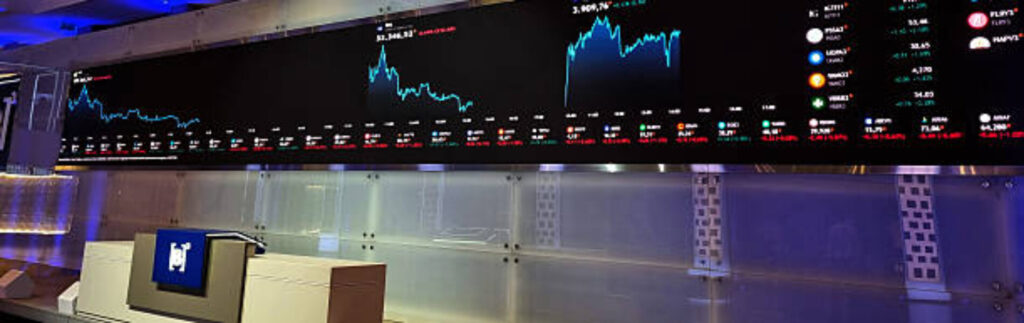
The Ibovespa closed this Monday August 17th down 0.09%, at 166,783.57 points, marking its tenth consecutive session in the red. The rise in Petrobras (PETR3; PETR4) helped limit the index's losses, on a day also marked by the 33.33% drop in Casas Bahia, by economic indicators and the rise in oil prices. The dollar, in turn, fell 0.36% today, back to R$ 5.200. The stock market is going through a delicate moment. The proximity to the elections and the fiscal problem, amidst the accelerating growth of public debt, are also gaining increasing weight. (Photo by: Faga Almeida/UCG/Universal Images Group via Getty Images)
Forex trading can move quickly, and having the right forex trading tools can make it easier to analyze the market, identify potential opportunities, manage risk, and stay disciplined. From economic calendars and charting platforms to trading signals and position-size calculators, the right tools can help turn a chaotic trading routine into a more structured process.
However, tools are not a shortcut to guaranteed profits. Forex trading involves significant risk, particularly when leverage is used. The U.S. Securities and Exchange Commission’s Investor.gov notes that leverage can magnify both gains and losses, while the CFTC warns traders to be cautious of systems or signals that promise unrealistic returns.
In this guide, we explore 7 powerful trading tools every forex trader should know and explain how each can fit into a practical trading workflow.
Table of Contents
- What Are Forex Trading Tools?
- Forex Trading Platform
- Economic Calendar
- Trading Charts and Technical Analysis Tools
- Forex Trading Signals
- Position Size Calculator
- Pip and Profit Calculator
- Trading Journal
- How to Combine Forex Trading Tools
- Common Mistakes When Using Trading Tools
- Frequently Asked Questions
- Final Thoughts
What Are Forex Trading Tools?
Forex trading tools are software applications, calculators, information sources, and analytical resources that help traders make more informed decisions.
They can help answer important questions such as:
- What is happening in the market?
- When are major economic announcements scheduled?
- Is the market trending or ranging?
- Where could a potential entry or exit occur?
- How much should I risk on a trade?
- How many pips could a trade potentially move?
- Am I following my trading strategy consistently?
The goal is not to use every available tool. Instead, successful traders typically build a simple workflow around tools that solve specific problems.
You can explore more resources through the Pip Notify Trading Tools & Resources category and browse the site’s Forex category.
1. Forex Trading Platform
One of the most important forex trading tools is your trading platform.
A trading platform is where you monitor currency pairs, analyze charts, place orders, manage open positions, and review trading activity.
Popular platforms can provide features such as:
- Live price charts
- Multiple timeframes
- Technical indicators
- Market orders
- Pending orders
- Stop-loss orders
- Take-profit orders
- Automated trading capabilities
- Historical price data
- Trade history
A good platform should be reliable, easy to navigate, and compatible with your trading strategy.
What Should You Look For in a Trading Platform?
Before choosing a platform, consider:
Ease of use: You should be able to locate important functions quickly.
Charting capabilities: Look for sufficient indicators, drawing tools, and timeframes.
Order management: Make sure you understand how market, limit, stop, stop-loss, and take-profit orders work.
Execution: Understand how your broker handles order execution, spreads, and potential slippage.
Risk controls: The platform should make it easy to manage your exposure.
Remember that a trading platform itself does not make a strategy profitable. It is simply the environment through which you execute your trading plan.
2. Economic Calendar
The economic calendar is one of the most useful forex trading tools for fundamental analysis.
Currencies can react sharply to economic announcements, especially events involving major economies such as the United States, United Kingdom, European Union, Japan, Canada, and Australia.
Economic calendars commonly display events such as:
- Interest-rate decisions
- Inflation reports
- Employment data
- GDP releases
- Central-bank speeches
- Manufacturing data
- Retail sales
- Consumer confidence
- Purchasing Managers’ Index reports
For example, an interest-rate decision from a major central bank can influence expectations about a currency and cause substantial price movement.
Why Is an Economic Calendar Important?
Imagine you are preparing to trade EUR/USD based on a technical setup. Your chart may look attractive, but a major U.S. economic announcement is scheduled within minutes.
The announcement could produce rapid volatility and change the technical picture almost instantly.
Checking the calendar before entering a trade can therefore help you understand the potential market environment.
For additional market information, visit the Economic News & Calendar section on Pip Notify.
3. Trading Charts and Technical Analysis Tools
Charts are at the center of many forex trading strategies.
A good charting setup allows traders to study historical and current price action while looking for patterns, trends, support, resistance, and potential entry or exit areas.
Popular Technical Analysis Tools
Some commonly used technical indicators include:
- Moving averages
- Relative Strength Index (RSI)
- Moving Average Convergence Divergence (MACD)
- Bollinger Bands
- Average True Range (ATR)
- Stochastic oscillator
- Fibonacci retracement
- Volume-related indicators
Traders can also use drawing tools to mark:
- Support zones
- Resistance zones
- Trendlines
- Channels
- Supply and demand areas
- Breakout levels
- Previous highs and lows
The important point is not to add dozens of indicators to one chart.
More indicators do not automatically mean better analysis.
A cleaner chart with a small number of indicators that you understand can be more useful than a chart covered with conflicting signals.
For more market-analysis content, explore the Technical Analysis section on Pip Notify.
4. Forex Trading Signals
Forex trading signals are another popular tool used by traders.
A trading signal may provide information about a potential trade, such as:
- Currency pair
- Buy or sell direction
- Entry level
- Stop-loss level
- Take-profit levels
- Risk-to-reward information
Signals can come from manual analysis, technical systems, algorithms, or automated models.
Pip Notify also has a dedicated Trading Signals section for traders interested in signal-related content.
Should You Trade Every Signal?
No.
A signal should be treated as information to evaluate, not an automatic guarantee that a trade will succeed.
The CFTC specifically warns that automated programs and trading signals cannot consistently predict the future.
Before following a signal, consider:
- Does it match your trading strategy?
- Is the risk clearly defined?
- Is the potential reward reasonable relative to the risk?
- Are major economic announcements approaching?
- Do you understand why the trade is being considered?
- Is the provider transparent about its methodology and risks?
A disciplined trader evaluates a signal rather than blindly following it.
5. Position Size Calculator
Risk management is one of the most important parts of forex trading, which makes a position size calculator an extremely useful tool.
A position-size calculator can help determine how large a trade should be based on factors such as:
- Account balance
- Percentage of capital you are willing to risk
- Stop-loss distance
- Currency pair
- Pip value
Simple Example
Suppose a trader has a $1,000 account and decides to risk 1% on a trade.
The maximum planned risk would be:
$1,000 × 1% = $10
If the stop-loss is 20 pips away, the trader can use the appropriate pip value and position-size calculation to determine a position that keeps the planned loss around $10 if the stop is triggered.
This is much more disciplined than choosing a lot size simply because it “looks right.”
Why Position Sizing Matters
Leverage can significantly increase the impact of relatively small market movements. Investor.gov warns that forex leverage can amplify losses and, depending on the arrangement, losses can potentially exceed the initial amount deposited.
A position-size calculator therefore helps traders think about risk before entering the market.
6. Pip and Profit Calculator
A pip calculator is another useful forex trading tool.
A pip is a standardized unit used to describe changes in the exchange rate of many currency pairs. Traders use pips to measure movements, calculate potential gains or losses, and define stop-loss and take-profit distances.
A pip calculator can help estimate:
- Pip value
- Potential profit
- Potential loss
- Risk in account currency
- Position size
- Stop-loss exposure
Example
Suppose you enter a trade with a 30-pip stop-loss and a 60-pip take-profit.
The setup has a potential:
Risk-to-reward ratio = 1:2
That means the potential target is twice the distance of the planned stop-loss.
Of course, a 1:2 risk-to-reward ratio does not guarantee profitability. The strategy still needs a valid market edge and consistent execution.
A calculator simply makes the mathematics easier and reduces avoidable mistakes.
7. Trading Journal
A trading journal is one of the most underrated forex trading tools.
While charts and signals help you analyze the market, a trading journal helps you analyze yourself.
A useful journal can record:
- Date and time
- Currency pair
- Buy or sell direction
- Entry price
- Stop-loss
- Take-profit
- Position size
- Risk percentage
- Trade result
- Strategy used
- Market conditions
- Reason for entering
- Reason for exiting
- Emotional state
- Mistakes made
- Lessons learned
Why Keep a Trading Journal?
Imagine that you complete 50 trades.
Without a journal, you may only remember the biggest wins and losses.
With a journal, you can identify patterns.
Perhaps your results show that:
- You perform better during London sessions.
- You frequently overtrade after a loss.
- Your breakout strategy performs poorly in sideways markets.
- Your best trades occur when risk is below a certain level.
- You enter too early before confirmation.
These insights can be more valuable than another technical indicator.
How to Combine Forex Trading Tools
The real power of forex trading tools comes from combining them into a structured process.
Here is an example of a simple workflow.
Step 1: Check the Economic Calendar
Identify major economic announcements that could affect the currency pairs you want to trade.
Step 2: Analyze the Chart
Use your preferred technical-analysis tools to identify the market trend, important levels, and potential setups.
Step 3: Check Trading Signals
If you use signals, compare them with your own analysis instead of automatically entering.
Step 4: Calculate Your Risk
Use a position-size calculator to determine an appropriate trade size based on your account and stop-loss distance.
Step 5: Execute the Trade
Place the trade through your chosen platform and define your risk-management parameters.
Step 6: Record the Trade
Add the trade to your journal, including the reason for entering and the result.
Step 7: Review Your Performance
At the end of the week or month, analyze your journal to identify recurring strengths and weaknesses.
This process turns individual tools into a complete trading workflow.
Common Mistakes When Using Trading Tools
Even the best forex trading tools can become harmful when they are used incorrectly.
Using Too Many Indicators
Adding ten indicators to your chart can create conflicting information.
Start with a small number of tools that serve clear purposes.
Treating Signals as Guarantees
A signal is not a guaranteed prediction. Markets can move unexpectedly, and even carefully researched setups can fail.
Ignoring Risk Management
A technically excellent setup can still produce a damaging loss if the position size is too large.
Trading During Every Economic Release
News can create extreme volatility. Not every announcement is an opportunity to trade.
Relying on Technology Instead of Skill
Tools should support your decision-making process, not replace your understanding of the market.
Chasing Guaranteed Returns
Be particularly cautious when someone claims that a trading system, signal service, or automated program can produce guaranteed or unusually large returns.
The CFTC warns that many forex scams promote unrealistic profits and that traders should be careful with unsolicited offers and unregistered providers.
How to Choose the Best Forex Trading Tools
The best forex trading tools depend on your strategy, experience, and trading style.
Before adding a tool to your workflow, ask:
Does it solve a specific problem?
If you cannot explain what the tool does, you probably do not need it yet.
Does it improve decision-making?
A useful tool should make your process clearer rather than more confusing.
Does it help manage risk?
Risk-management tools deserve special attention because protecting capital is essential to long-term trading.
Is the information reliable?
Use reputable sources and verify important information before acting on it.
The National Futures Association recommends that investors learn how markets work and conduct due diligence on firms and individuals before participating in retail forex or other derivatives markets.
Frequently Asked Questions About Forex Trading Tools
What are the best forex trading tools for beginners?
Beginners can start with a trading platform, economic calendar, basic charting tools, position-size calculator, and trading journal. These provide the foundations for analysis, risk management, and performance tracking.
Are forex trading signals reliable?
Forex signals can provide useful information, but they are not guaranteed predictions. Traders should evaluate the source, understand the risk, and compare signals with their own analysis.
What tool helps calculate forex position size?
A position-size calculator can estimate the appropriate trade size based on account balance, risk percentage, stop-loss distance, and pip value.
Do professional forex traders use trading tools?
Yes. Different traders use different combinations of platforms, charts, economic data, risk-management tools, research resources, and journals.
Can trading tools guarantee forex profits?
No. There is no trading tool that can guarantee profits. Markets are uncertain, and technology cannot eliminate trading risk. The CFTC specifically cautions that automated systems and signals cannot consistently predict future market movements.
How many forex trading tools should I use?
There is no fixed number. A simple collection of tools that supports your strategy is generally more useful than a large collection of tools that creates confusion.
Final Thoughts: Build a Smarter Trading Workflow
The best forex trading tools do not make decisions for you. They help you make better-informed decisions.
The seven tools covered in this guide provide a strong foundation:
- Forex trading platform – execute and manage trades.
- Economic calendar – monitor important economic events.
- Trading charts and technical analysis tools – study price action.
- Forex trading signals – identify potential setups for further evaluation.
- Position size calculator – manage trade exposure.
- Pip and profit calculator – understand potential gains and losses.
- Trading journal – measure and improve your performance.
You can continue exploring Pip Notify’s Trading Tools & Resources, Forex content, Technical Analysis, and Trading Signals to build a more organized trading routine.
For independent risk and investor-education information, traders can also consult Investor.gov’s forex guidance and the CFTC’s forex fraud and investor-protection resources. The National Futures Association’s investor resources are another useful source for due diligence and education.
Remember: no indicator, signal, calculator, or trading platform can remove market risk. Use your tools to improve your process, manage risk, and stay disciplined—not to chase guaranteed profits.
Risk Disclaimer: Forex and leveraged trading involve substantial risk and may not be suitable for every trader. You can lose some or all of your trading capital. Always understand the risks, use appropriate risk management, and never trade money you cannot afford to lose.