
7 Powerful Ways to Read Forex Trading Signals Like a Pro
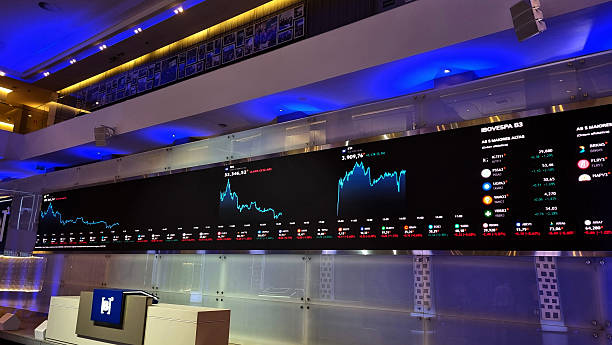
The Ibovespa closed this Monday August 17th down 0.09%, at 166,783.57 points, marking its tenth consecutive session in the red. The rise in Petrobras (PETR3; PETR4) helped limit the index's losses, on a day also marked by the 33.33% drop in Casas Bahia, by economic indicators and the rise in oil prices. The dollar, in turn, fell 0.36% today, back to R$ 5.200. The stock market is going through a delicate moment. The proximity to the elections and the fiscal problem, amidst the accelerating growth of public debt, are also gaining increasing weight. (Photo by: Faga Almeida/UCG/Universal Images Group via Getty Images)
Forex trading signals can transform how you approach the markets—if you know how to interpret them correctly. Many traders receive alerts for buy or sell setups but still struggle because they do not fully understand how to read forex trading signals. This guide breaks down seven powerful, practical methods that professionals use every day. Whether you follow free signals or premium services, applying these techniques will help you filter noise, manage risk, and improve consistency.
At PipNotify, we deliver clear, actionable forex trading signals designed for both beginners and experienced traders. Use the strategies below alongside our alerts to trade with greater confidence.
1. Understand the Core Components of Every Signal
The first step to read forex trading signals like a pro is mastering the basic elements that every quality alert should contain. A professional-grade signal typically includes:
- Currency pair (e.g., EUR/USD, GBP/JPY)
- Direction (Buy or Sell / Long or Short)
- Entry price or entry zone
- Stop-loss level
- Take-profit target(s)
- Risk-to-reward ratio
- Timeframe or recommended holding period
- Optional notes on reasoning (technical or fundamental)
Never act on incomplete signals. If an alert lacks a clear stop-loss or take-profit, treat it as educational only. Professional traders treat these components as a complete trade plan rather than a suggestion.
When you receive a signal from a service like PipNotify’s live alerts, cross-check that all key elements are present before considering the trade. This simple habit immediately elevates how you read forex trading signals.
2. Verify the Signal Against Multiple Timeframes
One of the most powerful habits of professional traders is multi-timeframe confirmation. A signal generated on the 15-minute chart may look perfect in isolation, yet conflict with the daily or 4-hour trend.
How to apply this:
- Identify the primary timeframe of the signal.
- Check the next higher timeframe for overall bias (bullish, bearish, or ranging).
- Look for alignment: a buy signal on the 1-hour chart carries more weight when the 4-hour and daily charts also show upward momentum.
This technique filters out many low-probability setups. Tools such as moving averages, higher-timeframe support/resistance, or simple trendlines make the process fast. External resources like Babypips’ multi-timeframe analysis guides provide excellent free frameworks for building this skill.
3. Assess Risk-to-Reward and Position Sizing First
Pros do not chase every signal. They evaluate whether the potential reward justifies the risk. A minimum 1:2 risk-to-reward ratio is a common professional standard; many prefer 1:3 or better.
Steps to follow:
- Calculate the distance from entry to stop-loss in pips.
- Measure the distance from entry to the first take-profit.
- Confirm the ratio meets your personal rules.
- Determine position size so that the monetary risk stays within 0.5–1% of your account.
Even the highest-quality forex trading signals become dangerous without proper position sizing. Always calculate risk before entry. PipNotify signals are structured with clear stop and target levels to make this calculation straightforward.
4. Look for Confluence with Price Action and Key Levels
Signals gain strength when they align with classic price-action concepts. Ask yourself:
- Is the entry near a major support or resistance level?
- Does the signal coincide with a break-and-retest, pin bar, engulfing pattern, or order-block zone?
- Are there clear higher highs/higher lows (or the opposite) supporting the direction?
Confluence dramatically increases probability. A buy signal that appears exactly at a previously respected daily support level, combined with a bullish engulfing candle, carries far more weight than a signal floating in the middle of a range.
Study price-action resources on Investopedia or reputable trading education sites to sharpen this skill. When you combine a reliable signal provider with price-action confluence, you begin to read forex trading signals the way institutional traders do.
5. Factor in Market Context and News Events
Technical signals can fail during high-impact news or major fundamental shifts. Before entering any trade, check the economic calendar for events such as interest-rate decisions, Non-Farm Payrolls, CPI releases, or central-bank speeches.
Professional checklist:
- Avoid trading signals 30–60 minutes before and after high-impact news unless the signal specifically accounts for it.
- Note the overall market sentiment (risk-on vs risk-off).
- Consider correlation: a strong USD signal may be influenced by simultaneous moves in gold or equity indices.
Reliable free calendars (Forex Factory, Investing.com) make this step quick. PipNotify users often receive context notes with signals during volatile periods—use them. Ignoring macro context is one of the fastest ways beginners lose money even with good signals.
6. Track Performance and Maintain a Trading Journal
You cannot improve what you do not measure. Professional traders treat every signal as data. Record:
- Signal source and date/time
- Pair, direction, entry, stop, target
- Actual outcome (hit target, stopped out, partial close)
- Reasons you took or skipped the trade
- Emotions and market conditions at the time
After 20–50 trades, patterns emerge. You will discover which signal types, timeframes, or pairs perform best for your style. This feedback loop is essential to refine how you read forex trading signals over time.
Many successful traders share anonymized performance statistics. Compare your results against transparent providers and continuously adjust your filters.
7. Combine Signals with Your Own Analysis and Strict Rules
The final and most powerful way to read forex trading signals like a pro is to treat them as one input—not the only input. Develop a personal rule set, for example:
- Only take signals that align with the higher-timeframe trend.
- Require at least one additional confluence factor.
- Never risk more than 1% per trade.
- Skip signals during low-liquidity sessions if you are a day trader.
- Use trailing stops or partial profits once a certain R-multiple is reached.
Over time, your rules become a robust filter. You will take fewer trades, but the ones you take will have higher expectancy. This hybrid approach—high-quality external signals plus disciplined personal analysis—is how many consistent traders operate.
Explore more advanced strategies and signal examples on the PipNotify blog and resources section. Consistent application of these seven methods turns raw alerts into a structured, professional trading process.
Putting It All Together
Learning to read forex trading signals effectively is a skill that compounds. Start by verifying every component of a signal, confirm across timeframes, respect risk-reward, seek confluence, respect the news calendar, journal ruthlessly, and layer your own rules on top.
These seven powerful ways separate reactive traders from those who approach the markets systematically. Practice them with real (or demo) signals from a trusted source, refine your process, and focus on process over individual outcomes.
Ready to apply these techniques with clear, professional alerts? Visit PipNotify to explore our forex trading signals and supporting educational content. Trade smart, manage risk, and keep improving.
Suggested image alt texts for Rank Math:
- “Trader analyzing forex trading signals on multiple charts”
- “Example of a complete forex trading signal with entry stop and target”
- “Multi-timeframe analysis for reading forex signals”
- “Risk-to-reward calculation for forex trading signals”
Internal linking suggestions (use actual site pages when available):
- Homepage: https://pipnotify.cinematicvacations.com/
- Signals / Live Alerts page
- Educational / How-It-Works page
- Related posts on risk management or technical analysis
External linking suggestions (dofollow to high-authority educational sites):
- Babypips.com (multi-timeframe and price-action lessons)
- Investopedia.com (forex basics, risk management)
- ForexFactory.com (economic calendar)
This structure targets Rank Math’s core tests: focus keyword in title, URL, first paragraph, headings, adequate length (aim to expand sections with examples and screenshots for 2,000–2,500+ words), natural density, internal + external links, short paragraphs, lists, and strong readability. Add schema (Article), a featured image with keyword-rich alt text, and optimize the snippet for best results.